
Shopping for auto insurance can feel overwhelming, especially when comparing rates across different states. Many drivers in Texas and Florida wonder why their premiums differ and what factors truly affect their monthly bills. Understanding how insurers calculate rates in both places can help you find the best deal possible. Additionally, understanding the factors that matter most in each state can have a significant impact on your wallet. If you drive in either Texas or Florida, it pays to stay informed about your insurance options. By focusing on these crucial details, you can protect both your car and your finances. In this article, you’ll learn about how insurance rates are set, what influences your premium, and how to shop smarter in both states.
Understanding How Auto Insurance Rates Are Set
Auto insurance companies like this use a complex formula to determine how much you pay for coverage. First, insurers assess your risk as a driver by looking at your driving record, age, and even your credit score. Next, they evaluate the type of car you drive, considering factors like its safety ratings, repair costs, and likelihood of theft. Additionally, your location plays a significant role, as areas with higher accident or crime rates tend to result in higher premiums.
State regulations also impact the way rates are set, often requiring minimum levels of coverage. For example, both Texas and Florida have different mandatory coverage types and limits, which insurance providers must factor into their calculations. Insurers must comply with these legal requirements, and as a result, the average cost of coverage can vary widely from state to state.
Furthermore, insurance companies consider broader trends, such as regional weather patterns, medical costs, and the frequency of lawsuits. These trends can push rates higher, particularly in areas prone to natural disasters or where accident claims are common. Consequently, understanding how these variables interact gives you a clearer picture of why your rate might be higher or lower than someone else’s.
Key Factors Influencing Premiums in Texas and Florida
While some factors influencing auto insurance are universal, several elements affect Texas and Florida drivers in unique ways. In Texas, urban sprawl and heavy traffic in cities like Houston and Dallas often increase the risk of collisions, which can lead to higher insurance costs. On the other hand, rural drivers in Texas may see lower rates due to fewer vehicles on the road and a lower risk of accidents.
In Florida, severe weather is a constant concern, and frequent hurricanes or floods can drive premiums up. Moreover, the state has a high percentage of uninsured drivers, which forces insurers to charge more to cover potential losses. Additionally, Florida utilizes a no-fault insurance system, meaning your own insurer pays for your injury claims regardless of who caused the crash, which can also drive up costs.
Both states also see the effects of regional crime rates on premiums. Areas with higher rates of vehicle theft or vandalism naturally result in pricier insurance policies. Therefore, your home address within either Texas or Florida can make a significant difference in what you pay for auto coverage each year. Many drivers overlook these local nuances, but they can significantly impact your overall insurance expenses.
Comparing Average Costs for Drivers in Both States
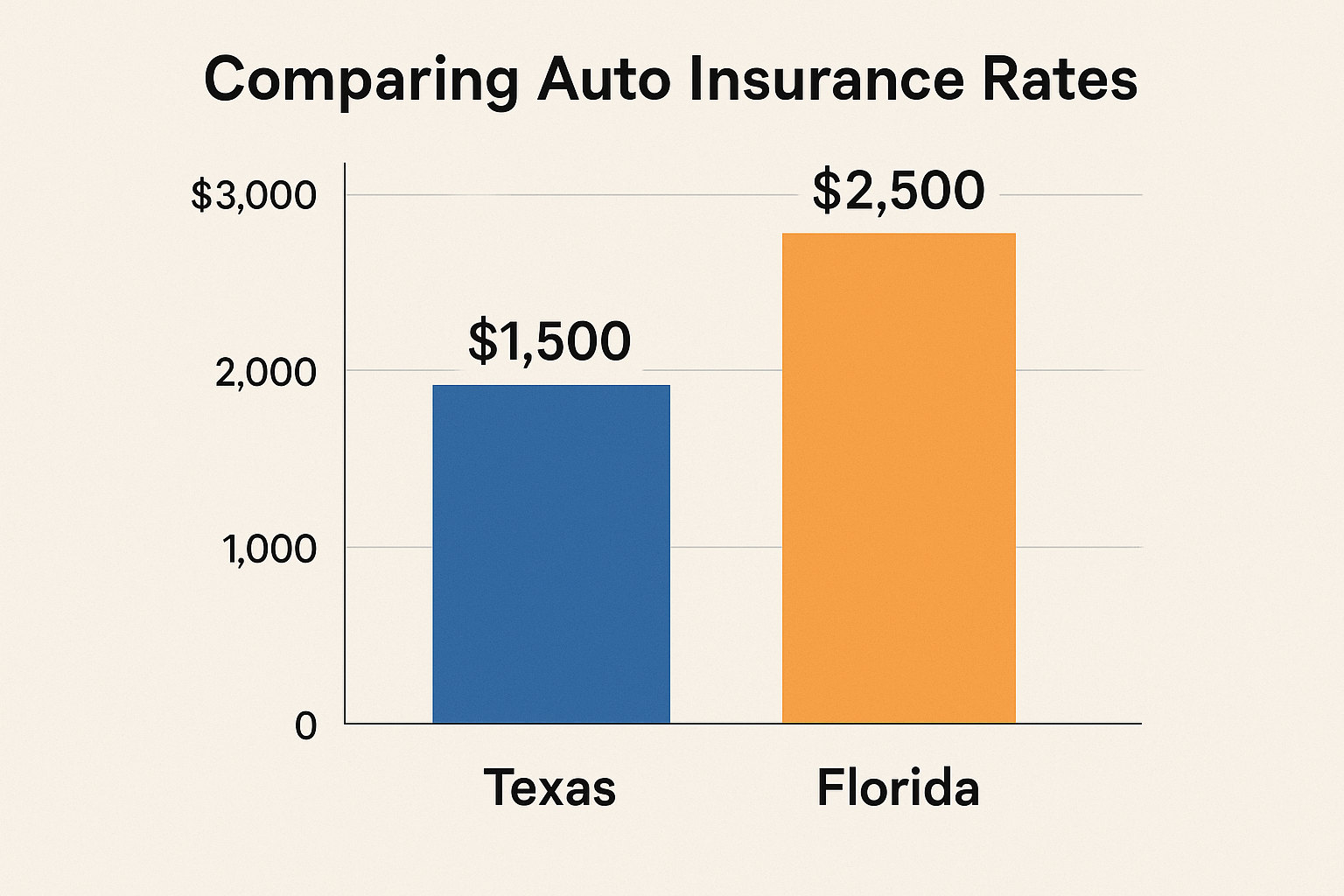
When comparing average auto insurance costs, Texas and Florida usually rank among the pricier states in the United States. Recent studies indicate that Florida drivers pay some of the highest premiums nationwide, primarily due to factors mentioned earlier, such as severe weather and a high number of uninsured motorists. In fact, the average annual premium in Florida often exceeds 2,400 dollars, making it a challenge for many families.
In Texas, rates tend to be somewhat lower, usually averaging about 1,800 to 2,000 dollars per year, depending on your city and driving history. Although Texas also faces risks like hailstorms and dense urban traffic, the state’s insurance markets are competitive, which can help keep rates in check for careful drivers. Overall, while Texans may pay less than Floridians on average, both states remain above the national average for auto insurance rates.
However, individual premiums can vary widely within each state. For instance, a driver in Miami might pay far more than someone in rural North Florida, just as a Houston resident could see higher rates than someone in West Texas. Therefore, shopping around and understanding local conditions are both crucial when seeking the best possible rate for your personal situation.
Tips for Finding the Best Auto Insurance Deals
To get the best auto insurance deal, start by comparing quotes from several reputable companies. Many insurers offer online tools that allow you to compare different rates side by side. Additionally, it is essential to review customer service ratings and financial stability before making a decision. A lower premium means little if the company cannot handle claims efficiently.
Next, consider raising your deductible if you can afford it, since higher deductibles often result in lower monthly payments. When reviewing your policy, check for discounts that apply to you, such as those for safe driving, bundled policies, or even good student grades. Furthermore, some insurers reward drivers for installing anti-theft devices or completing defensive driving courses, so be sure to ask your provider about all available savings.
Lastly, make it a habit to review your policy at least once a year, especially if you move, buy a new car, or experience other significant life changes. Life events can significantly impact your rate, and regular checkups ensure that you never pay more than necessary. By remaining proactive, you can continually improve your chances of finding the most affordable and effective auto insurance coverage.
What Texas and Florida Drivers Need to Know Moving Forward
Drivers in both Texas and Florida should stay informed about changes in state insurance laws and requirements. Lawmakers occasionally update the minimum coverage requirements, which can affect how much you pay in premiums. Therefore, it is essential to regularly review state guidelines to ensure compliance and avoid any potential legal issues.
Staying vigilant about your driving habits can also help keep your premium as low as possible. Safe drivers often enjoy significant discounts, and avoiding tickets or accidents makes a real difference on your bill. Moreover, maintaining a good credit score matters, since many insurance providers use credit information to help set your rates.
If you plan to move between Texas and Florida, always compare new quotes before changing your address. Insurers often adjust premiums based on local risks, so a rate that works in one city may not be the lowest available in another. By keeping an eye on your coverage and staying up to date with state regulations, you can make informed choices that save you money and keep you protected on the road.
Summary
Navigating the world of auto insurance can sometimes feel complicated, especially if you are comparing rates between two states like Texas and Florida. Each state has its own unique risks and regulations that contribute to the average cost of auto coverage. In Texas, factors such as urban congestion and competitive insurance markets influence your premium, while in Florida, severe weather and a high rate of uninsured drivers drive costs even higher. However, you can take control of your expenses by shopping around, seeking out discounts, and maintaining safe driving habits. Always review your policy details annually, as your needs and circumstances are likely to change. Being proactive about your insurance choices can lead to significant savings over time.
Additionally, staying informed about state laws ensures that you remain protected and legal on the road. Regardless of where you live, understanding these key differences and following innovative shopping practices enables you to make informed financial decisions. Ultimately, by doing your homework and paying attention to what matters most in your state, you can secure the best possible auto insurance deal for your needs.